
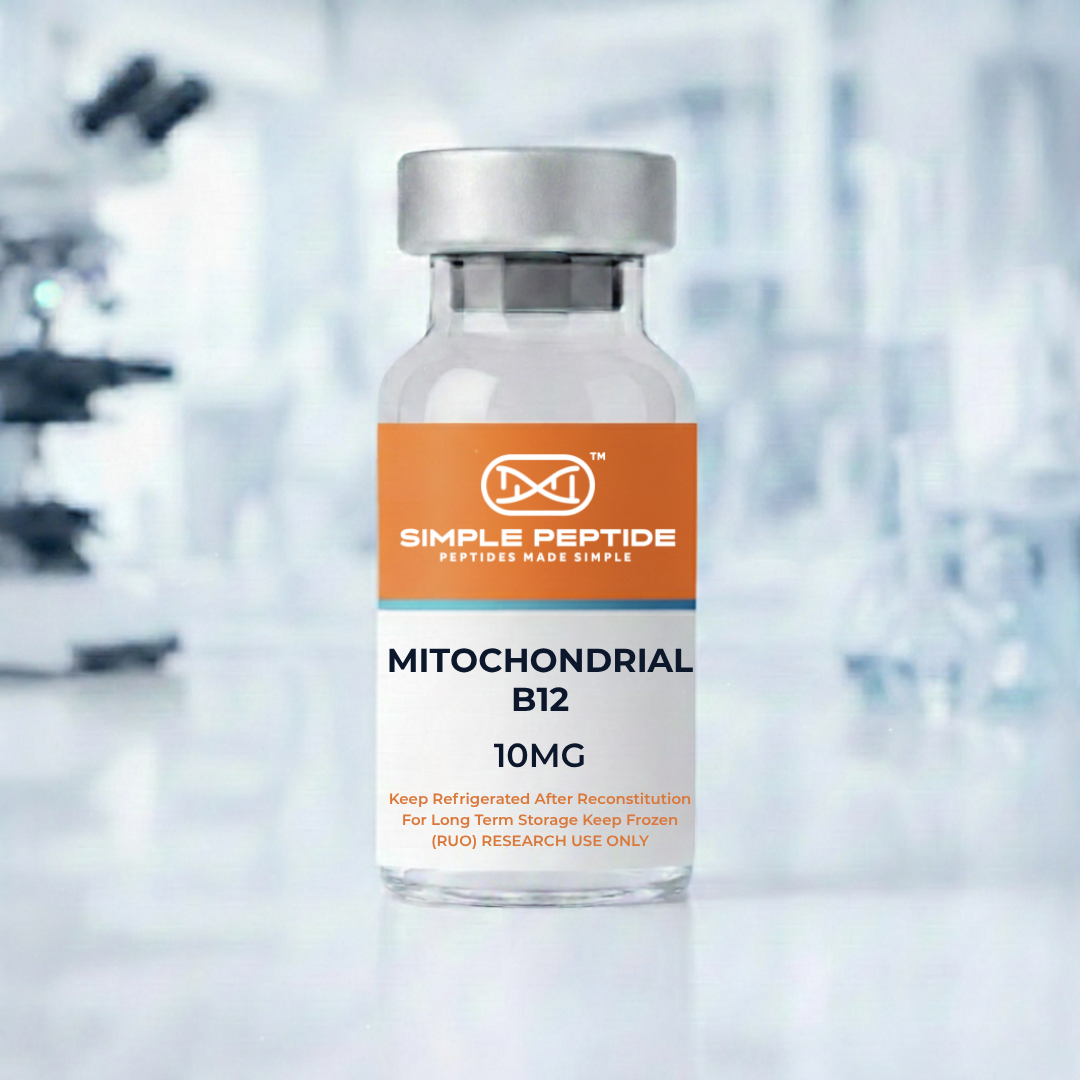
Mitochondrial B12


$55.00
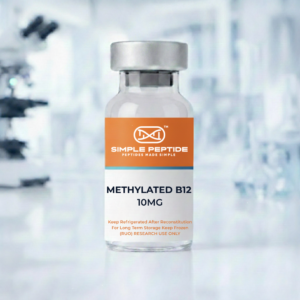
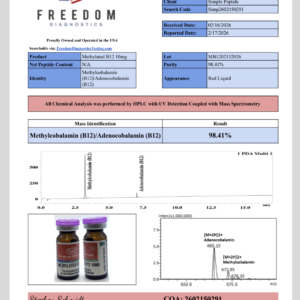
Mitochondrial B12 is a research-grade compound supplied for controlled laboratory investigation, with a focus on cellular energy dynamics and mitochondrial-associated pathways. Researchers utilize this compound in structured environments to evaluate how bioactive materials interact within energy production systems at the cellular level.
Designed for consistency and precision, Mitochondrial B12 supports investigative work centered around metabolic signaling, cofactor behavior, and intracellular activity under controlled conditions.
- Supports structured investigation of mitochondrial-associated pathways
- Utilized in cellular energy and metabolic signaling research
- Manufactured for consistency in controlled laboratory environments
1000 in stock
Mitochondrial B12 | Research Compound for Cellular Energy and Mitochondrial Studies
Mitochondrial B12 is a research compound designed for controlled lab use. It supports studies focused on cellular energy and mitochondrial pathways. Because of this, researchers use it to explore how cells manage energy.
In particular, mitochondria play a key role in cell function. Therefore, many studies focus on how compounds behave in these systems. As a result, Mitochondrial B12 is often included in structured research models. This helps researchers observe how materials interact with energy processes.
Cellular Energy Research Applications
Researchers use Mitochondrial B12 to study cellular energy and metabolic activity. In these models, they test how compounds affect energy pathways under set conditions.
In addition, this compound supports repeatable testing. For example, researchers can compare results across different setups more easily. Because of this, it works well in structured lab studies.
Mitochondrial Function and Pathway Analysis
Mitochondria drive many key cell processes. For this reason, they are a main focus in lab research. Mitochondrial B12 supports studies that look at how compounds interact with these pathways.
For instance, researchers may study cofactor activity and signaling behavior. They may also review how compounds act in cells over time. In turn, this helps build a clearer view of pathway activity. Because the compound has a defined structure, results stay more consistent.
Controlled Laboratory Use
Mitochondrial B12 is supplied for research use only. It is not intended for human or animal use. Instead, researchers handle it in controlled lab settings.
Additionally, consistent material quality supports reliable results. As a result, researchers can maintain stable test conditions across studies.
Key Features
- Research-grade compound for lab use
- Supports mitochondrial and cellular energy studies
- Used in metabolic and signaling pathway research
- Designed for consistent and repeatable results
- Intended only for controlled laboratory use
| Strength |
10MG |
|---|
No research information available for this product.
Peptide Research Overview

Peptides are short chains of amino acids studied for their role in cellular signaling and molecular interactions. In research settings, they are commonly used to explore biological pathways and structure–function relationships.
Across scientific disciplines, peptide research supports advances in biochemistry and molecular biology. Their precision and adaptability make peptides essential tools in modern laboratory research.
Key Benefits of Peptides in Research

-
Support precise investigation of cellular signaling pathways
-
Enable targeted structure–function research at the molecular level
-
Offer high specificity for controlled experimental design
-
Adapt easily across a wide range of research applications
-
Aid in studying protein interactions and biological responses
-
Allow consistent and repeatable laboratory testing
-
Integrate well with modern analytical and research methods
-
Serve as foundational tools in biochemical and molecular research
Advancing Scientific Research with Peptides

Peptides continue to serve as essential components in modern research due to their flexibility, precision, and well-defined structures. In laboratory settings, researchers rely on peptides to examine biological mechanisms, evaluate molecular interactions, and refine experimental models with a high level of control. Their scalable nature and compatibility with advanced analytical techniques make peptides valuable across both foundational studies and ongoing research development, supporting consistent, reproducible outcomes in controlled scientific environments.
Mitochondrial B12 is used in laboratory research focused on cellular energy systems and mitochondrial pathways. Researchers include it in studies that examine how bioactive compounds interact with energy-related processes under controlled conditions.
No. Mitochondrial B12 is strictly intended for research use only. It is not approved for human or animal use and is not intended for therapeutic, diagnostic, or clinical applications.
Mitochondria play a key role in cellular energy production. Therefore, researchers study these pathways to better understand how cells generate and manage energy within controlled laboratory models.
Researchers often use Mitochondrial B12 in studies focused on metabolic activity, cellular signaling, and energy pathway behavior. In addition, it may be included in experiments examining cofactor-related processes in controlled environments.
Mitochondrial B12 is prepared with consistency in mind. As a result, it supports repeatable testing across structured experiments. This allows researchers to compare outcomes more reliably.
Mitochondrial B12 should be handled only in controlled laboratory settings by qualified professionals. Proper research protocols and storage practices should always be followed to maintain integrity and consistency.
Research Use Only – Legal Disclaimer
All Simple Peptide products labeled as Research Use Only (RUO) are intended strictly for laboratory, investigational, and scientific research purposes. These materials are not approved by the FDA and are not intended for human or veterinary use, clinical applications, diagnostic procedures, or therapeutic treatment of any kind.
By purchasing or using RUO materials, you acknowledge that they will be handled only within an appropriate research environment by qualified personnel who understand the risks, limitations, and regulatory requirements associated with experimental compounds. Products must not be administered to humans or animals, offered as therapeutic agents, or represented as safe or effective for any medical purpose.
Use of these materials is entirely at your own risk. Simple Peptide assumes no liability for misuse, unsafe handling, improper application, or any regulatory or compliance issues arising from their use.
Frequently bought together: Mixing Syringe 21G 10ML Luer Lock, MOTS-C (10MG & 40MG), MOTS-C/GHK-CU/KPV Blend
Related products
Aminos and Lipotropics

Aminos and Lipotropics